The useful questions are how large the patch is and why it got wet; EPA says under about 10 square feet can often be cleaned at home. Call the number on this page to be connected with a local mold company in Bell Gardens.
Telling Surface Growth From Deep Growth
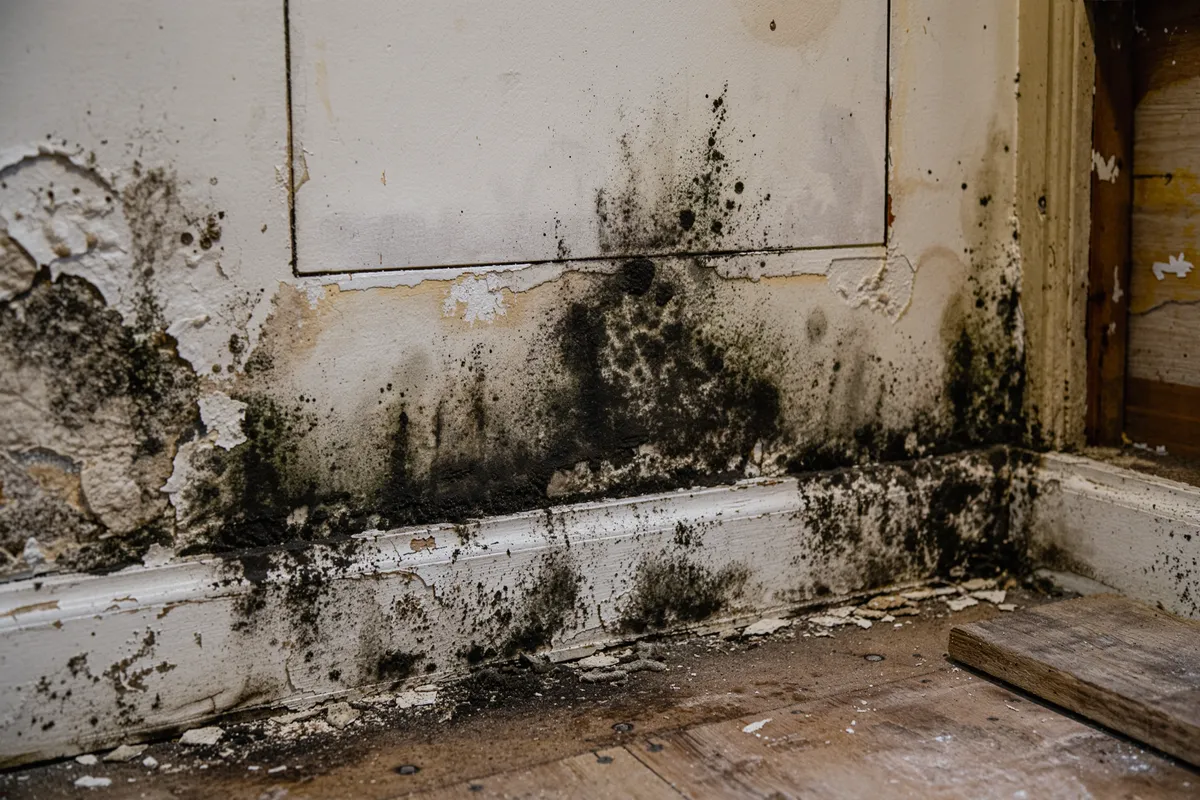
Dark growth sitting on tile or sealed wood is usually a surface problem. Dark growth on paper-faced drywall, insulation or raw framing usually runs deeper because those materials absorb water. The deeper it goes, the more likely removal, not cleaning, will be the plan. Ask yourself whether the material is hard and sealed or soft and absorbent.
Storms Test the Roof
After a heavy winter storm, a small roof or flashing leak can soak attic insulation and ceiling drywall without a visible drip. Weeks later the ceiling shows dark patches. Tracking the stain back to the roof or a vent penetration is part of fixing it properly. Temperature differences between a wall and the room air are what produce the dew.
Materials Change the Plan
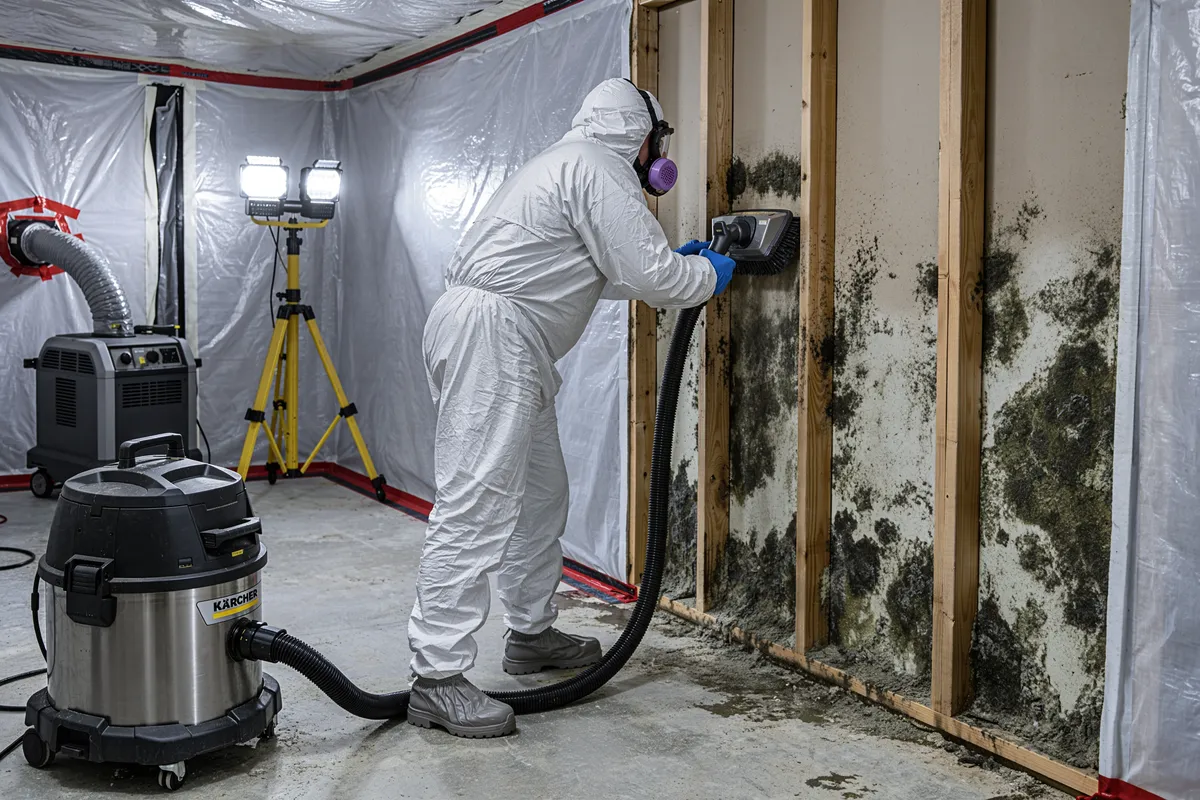
Tile, glass and sealed wood can often be cleaned in place. Drywall, ceiling tile, carpet pad and insulation that are moldy usually have to come out because they absorb moisture. The more porous material involved, the larger the removal and replacement portion of the job. Dense, sealed materials usually cost less to deal with than absorbent ones.
Moving Furniture and Belongings
Before the visit, clear a few feet around the affected wall and take valuables out of the room if you can. Hard items can usually be wiped; soft items such as couches, rugs and mattresses that sat near heavy growth may need separate cleaning or disposal. Ask in advance what the plan is for anything that must be discarded.
Small Habits That Help
Run the bath fan during showers and for a while after, wipe down shower walls, keep furniture a few inches off exterior walls and open closet doors now and then. None of this is complicated, yet it blocks the kind of repeating dampness that dark mold needs. Sealed tubs and sinks need regular caulk checks too.
Who handles what in Bell Gardens
There is no California mold license to look up. What you can check is the company's CSLB contractor license, which state rules require once a job reaches $1,000 in combined labor and materials.
If the job grows into replacing drywall, cabinets or framing, ask whether the rebuild needs a permit from the local building department.
Tenants in much of the county report mold and leaks in rentals to the Los Angeles County Department of Public Health; check with the city whether that covers your Bell Gardens address.
Calls from Bell Gardens are often matched with companies that also cover Downey, Maywood and Huntington Park.
Black Mold Removal questions in Bell Gardens
Do I need to test black mold first?
Does painting over black mold work?
Do older homes get dark mold more often?
Does coastal fog cause black mold?
More mold services in Bell Gardens
Black Mold Removal nearby
Helpful guides
Sources
Last updated: