EPA advises drying wet materials within 24 to 48 hours, which applies to a stockroom as much as a living room. Call the number on this page to be connected with a local mold company in El Monte.
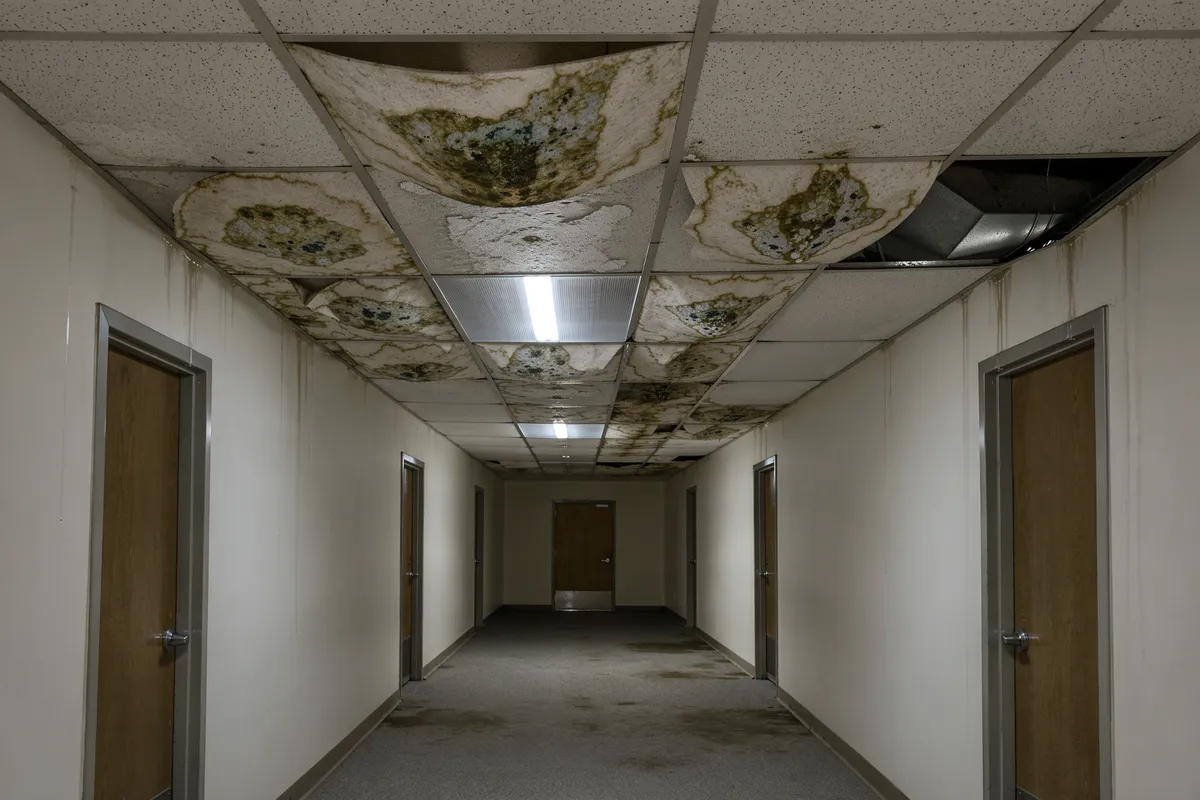
Warehouses and light industrial
Large roofs, skylights, loading docks and slab edges move a lot of water. Cardboard, pallets and stored fabric make mold easy to spot but also easy to spread. If growth is on the building itself, such as insulation or wall panels, not just the stock, bring in a company to scope it. Note whether the area is near a roof hatch, drain or skylight curb.
Plumbing risers and shared walls
In multistory buildings, one failed fitting on a riser can wet several floors. Water travels down chases and along the tops of walls, so the damp area can be far from the leak. Tracing it often takes moisture meters and a few small openings rather than a single obvious hole. Roof age and the last time drains were cleared are useful facts to share.
Drying and monitoring
Drying equipment, daily moisture readings and the number of days it must run can make up a sizable part of a commercial job. A scope that leaves out drying or monitoring may look less expensive at first, but it risks reopening walls if readings do not come down. Ask whether readings are logged each day and shared with you.
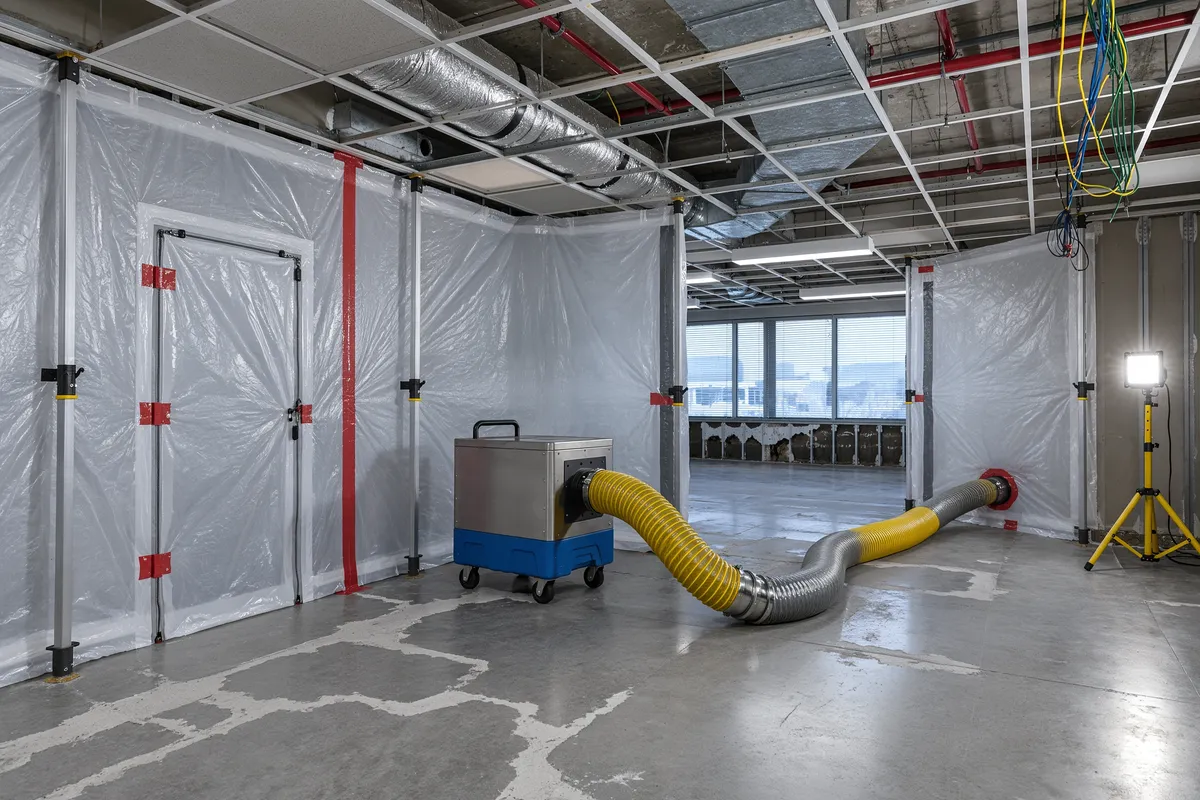
How containment is set up
Plastic sheeting and zipper doors seal the work zone, and a HEPA-filtered air machine keeps it under negative pressure so air moves in, not out. Workers enter through a controlled point. That arrangement is what lets the rest of the building keep operating nearby. Ask how neighboring tenants will be notified before work begins.
If water is still coming in
Stop the source if it is safe to do so, move stock and equipment away from wet areas and start drying. EPA advises drying wet materials within 24 to 48 hours. Once that window passes, growth becomes more likely, so call a company and mention exactly when the water event began. Photograph everything before moving stock so insurers see the original condition.
Permits, rentals and contractor checks in El Monte
A quick CSLB license lookup is worth doing before you sign: California has no mold-specific license, but contract work of $1,000 or more needs a state contractor license.
Remediation itself is cleanup, but putting the room back together can be permitted work; ask the contractor whether the City of El Monte Building and Safety needs to be involved.
In many Los Angeles County cities, rental mold complaints go to the Los Angeles County Department of Public Health. Your city hall can tell you whether that applies in El Monte.
Calls from El Monte are often matched with companies that also cover Temple City, South El Monte and Baldwin Park.
Commercial Mold Remediation questions in El Monte
Do we need an assessor as well?
Should we test the air in our building?
What about mold in an apartment building?
What if a company only treats the surface?
More mold services in El Monte
Commercial Mold Remediation nearby
Helpful guides
Sources
- City of El Monte Building and Safety
- Los Angeles County Department of Public Health Environmental Health: housing complaints
- CSLB: What kind of contractor do you need?
- California Health and Safety Code 17920.3
- EPA: A Brief Guide to Mold, Moisture and Your Home
- California Department of Public Health: Mold
Last updated: