The useful questions are how large the patch is and why it got wet; EPA says under about 10 square feet can often be cleaned at home. Call the number on this page to be connected with a local mold company in Lawndale.
Dark Spots That Might Be Mold
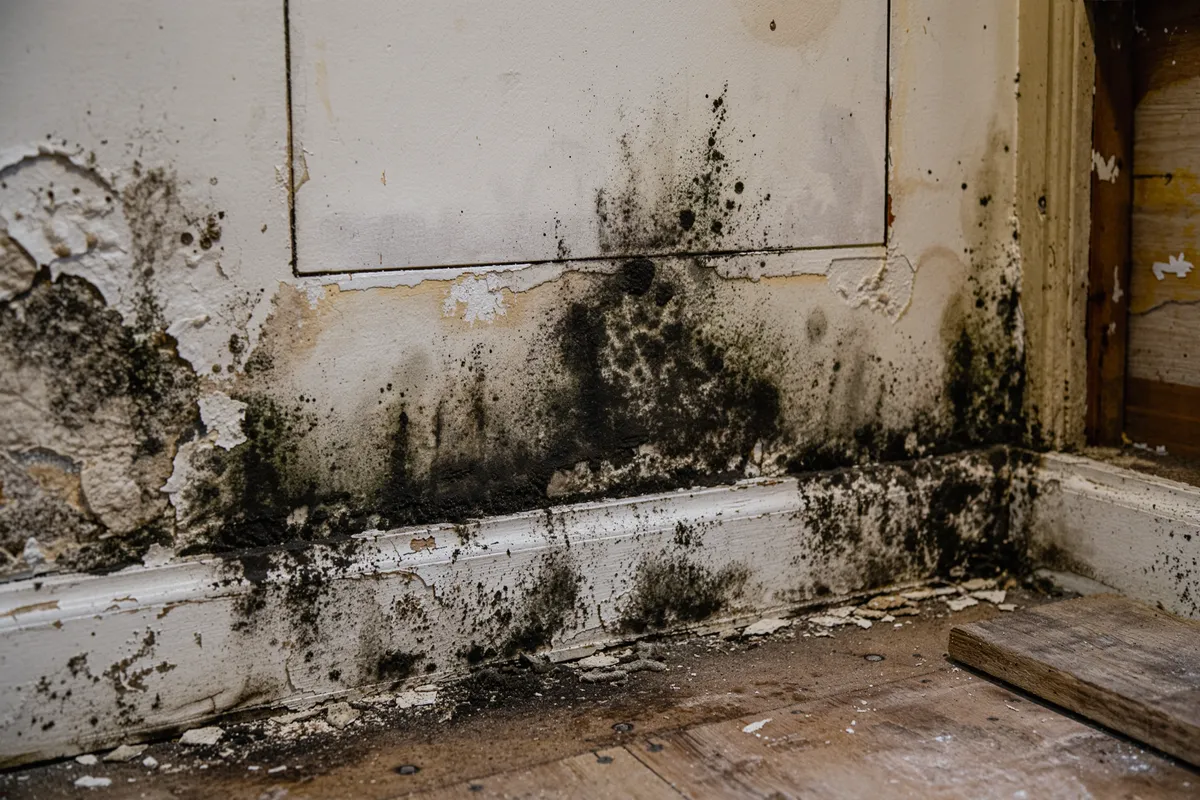
Black speckling on a ceiling corner, a grimy line along a baseboard, or a stain that returns after you wipe it can all be mold. Smell helps too: a damp, earthy odor in one room often marks the spot. Soot, dust and soap scum look similar, so a closer look matters. A flashlight held low against the wall shows texture changes the eye misses.
Stucco, Slab and Raised Foundation Homes
Stucco can let rain through hairline cracks, and the wall cavity dries slowly. Slab homes hide plumbing leaks beneath flooring, while raised-foundation houses collect damp air under the floor. Each setup produces dark growth in different places, which is why location is a clue. Cavity walls on the north or shaded side tend to dry slowest.
Materials Change the Plan
Tile, glass and sealed wood can often be cleaned in place. Drywall, ceiling tile, carpet pad and insulation that are moldy usually have to come out because they absorb moisture. The more porous material involved, the larger the removal and replacement portion of the job. Dense, sealed materials usually cost less to deal with than absorbent ones.
Containment Before Cleanup
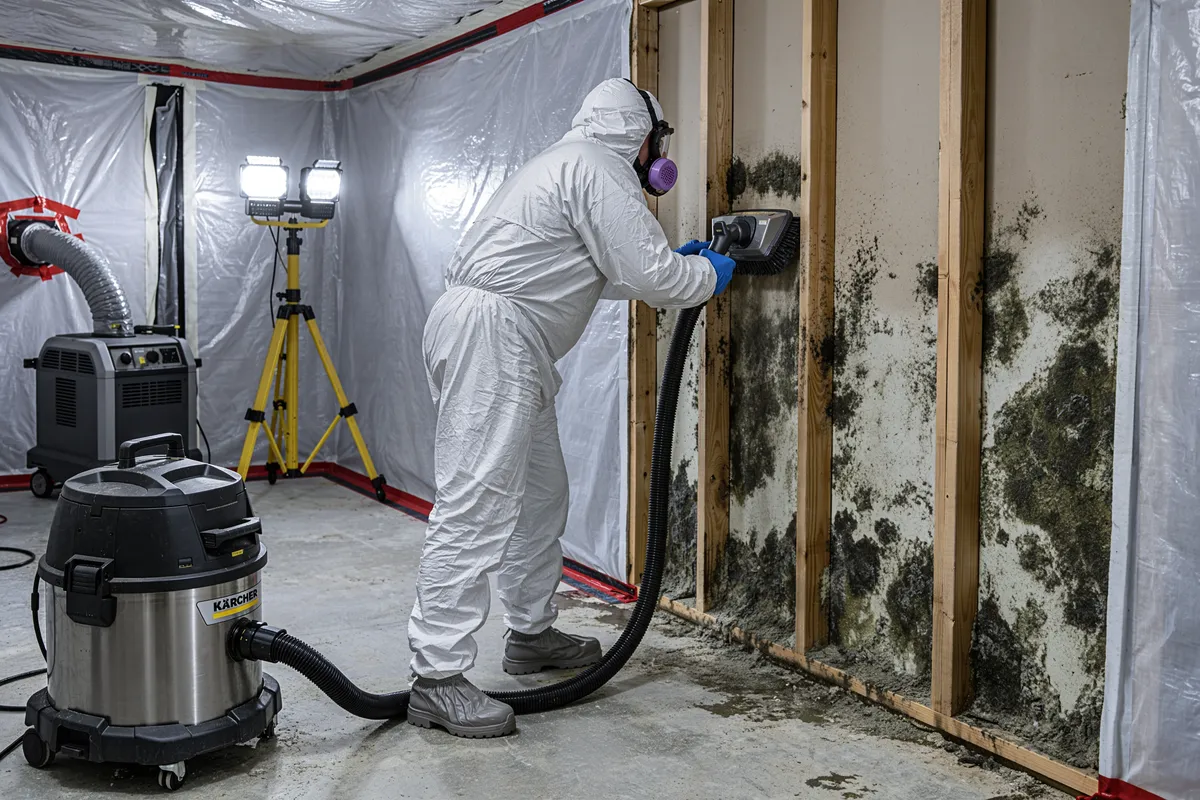
Disturbing dark mold can spread spores through the house, so companies seal off the work area with plastic sheeting, run a negative air machine with HEPA filtration and protect floors. If a plan skips containment on anything larger than a small patch, ask why. A company should explain why each step is taking place.
After Removal, Stay Alert
For a few months after a job, watch the repaired area for new staining, smell or paint bubbling and keep an eye on humidity. Early signs of a return usually mean the moisture is not fully solved, and the company or a plumber should look again. A follow-up photo on the same day each month makes changes obvious.
Before work starts in Lawndale
There is no California mold license to look up. What you can check is the company's CSLB contractor license, which state rules require once a job reaches $1,000 in combined labor and materials.
If the job grows into replacing drywall, cabinets or framing, ask whether the rebuild needs a permit from the local building department.
Renting? The Los Angeles County Department of Public Health takes housing complaints, including mold, in cities that have adopted the County Health Code; the city can confirm who handles Lawndale addresses.
Nearby, the same kind of help is available in Hawthorne, Redondo Beach and Hermosa Beach.
Black Mold Removal questions in Lawndale
What does black mold behind a wall look like?
Do older homes get dark mold more often?
Does coastal fog cause black mold?
Does rebuilding after removal need a permit?
More mold services in Lawndale
Black Mold Removal nearby
Helpful guides
Sources
Last updated: