Leak-related mold has three parts: repair the source, dry the structure and remove what is moldy. Call the number on this page to be connected with a local mold company in Malibu.
Why Speed Matters
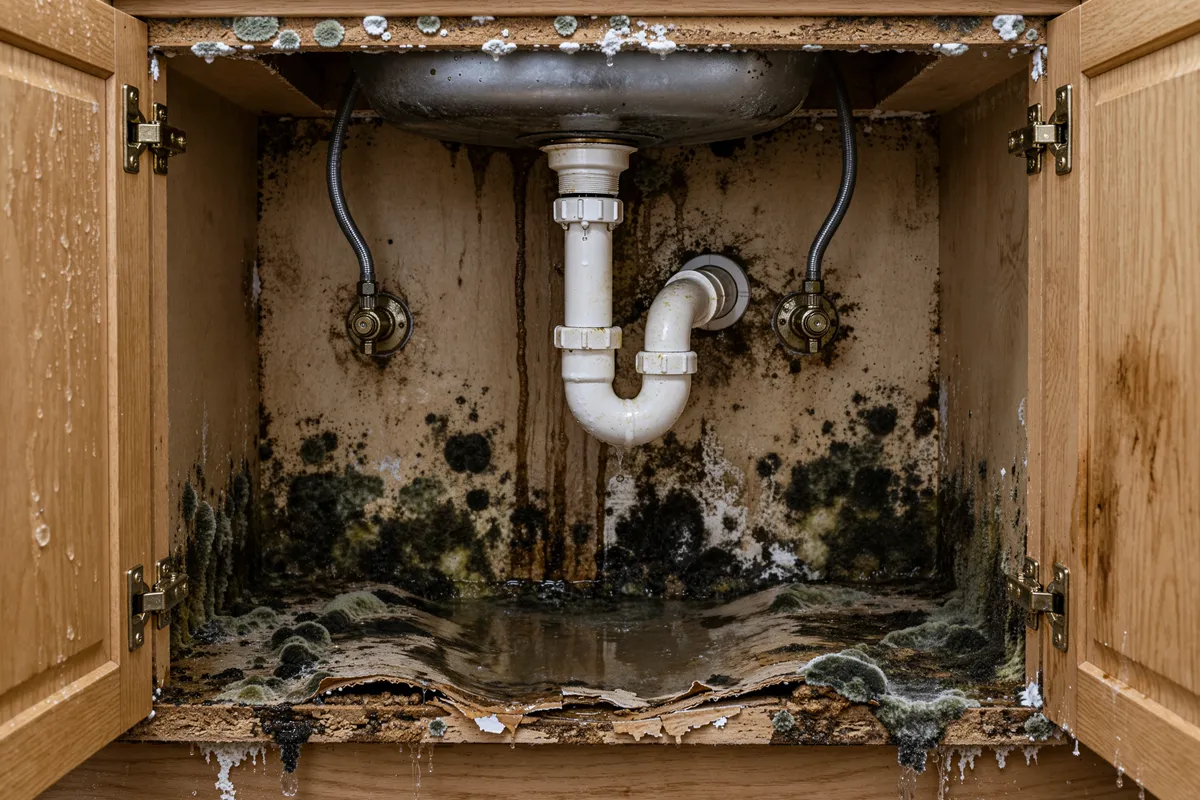
Mold needs moisture and an organic food source, and drywall paper, wood framing and carpet pad supply plenty. The longer these stay damp, the more likely growth starts. A day of quick action often decides whether a leak means a dry-out or a mold removal job. Cutting that window short is how many leak cleanups turn into removal jobs.
Supply Lines and Fixtures
Braided hoses under sinks and toilets, shower valves and old copper fittings can drip steadily for months. Because the water stays inside cabinets and walls, the first clue may be a soft floor or a smell rather than a visible leak. Replace any that look bulged.
Beach and harbor homes often run cool and humid in the morning. Water from a leak or a storm has a harder time drying, so quick equipment drying matters even more.
On sloped lots, clogged drains and failed waterproofing push storm water against the house. Lower-level walls can get wet without any visible roof or plumbing leak.
What Drives the Cost
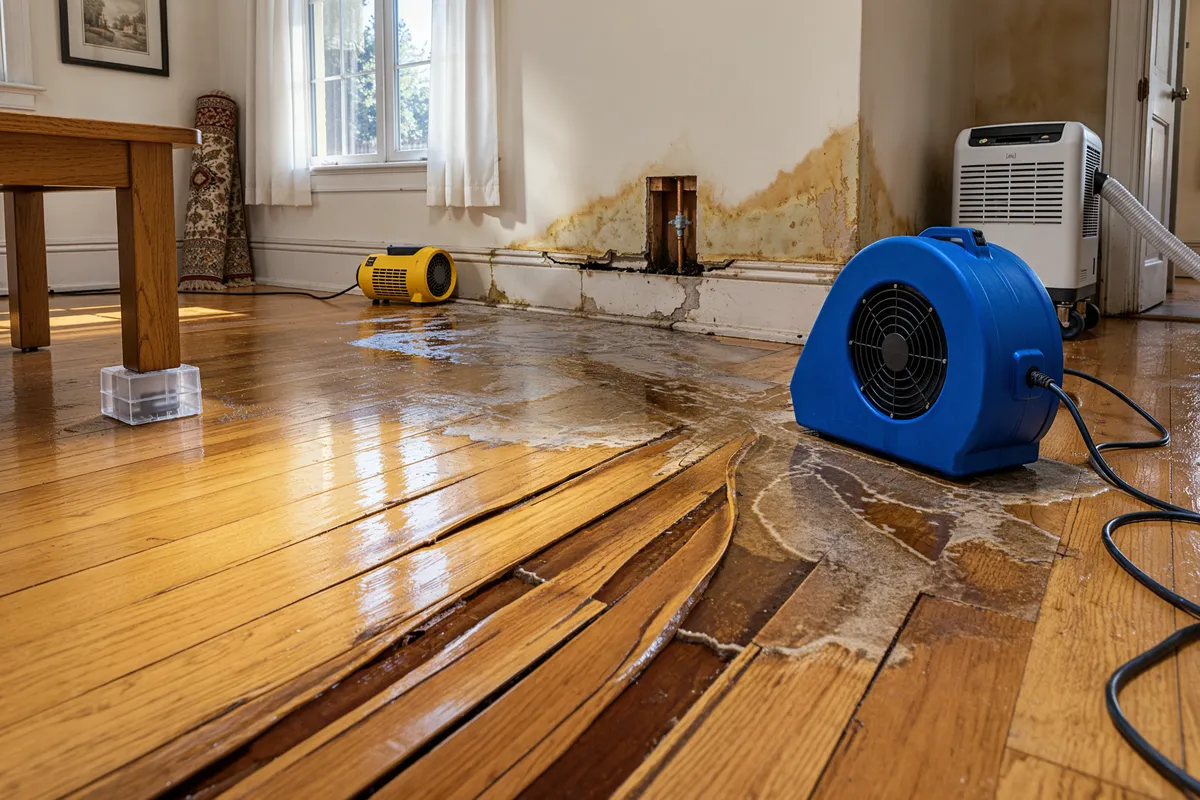
The size of the wet area, how long it stayed wet, the materials involved and how much needs to come out all shape the price. A caught-early leak may need only drying, while a long-hidden leak can mean removing drywall, insulation and flooring and then rebuilding. Cost swings with the answers to the questions above, not with the label on the job.
What Gets Thrown Out
Items near the leak are sorted by material. Hard goods can often be cleaned, while soaked upholstery, rugs, ceiling tile and particleboard may need to go. Companies often photograph and list discarded items, which can help with an insurance claim. Ask for a list of items removed, with photos, before disposal.
Water Heaters and Appliance Hoses
Replace aging braided hoses, add a drain pan under the water heater and consider leak detectors near high-risk spots. An alert at the first drip is easier than a repair after weeks of hidden wetting, and some detectors can shut off supply automatically. A basic sensor works fine as long as it has a loud alarm.
Who handles what in Malibu
Mold work in California falls under general contractor rules rather than a dedicated mold credential. Once labor and materials reach $1,000, the company needs a CSLB license, and the board's website shows whether it is current.
Rebuild work after the mold comes out, such as new drywall or framing, may need a permit; the local building department is the office for Malibu addresses.
Tenants in much of the county report mold and leaks in rentals to the Los Angeles County Department of Public Health; check with the city whether that covers your Malibu address.
Calls from Malibu are often matched with companies that also cover Canoga Park, Agoura Hills and Calabasas.
Leak & Water Damage Mold Removal questions in Malibu
How fast does mold grow after a leak?
Can wet drywall be saved?
Is mold after a roof leak different?
Are older homes more prone to hidden leaks?
More mold services in Malibu
Leak & Water Damage Mold Removal nearby
Helpful guides
Sources
Last updated: