Removal only holds if the water source is repaired first, so a good company traces the leak or condensation before taking out drywall. Call the number on this page to be connected with a local mold company in Mission Hills.
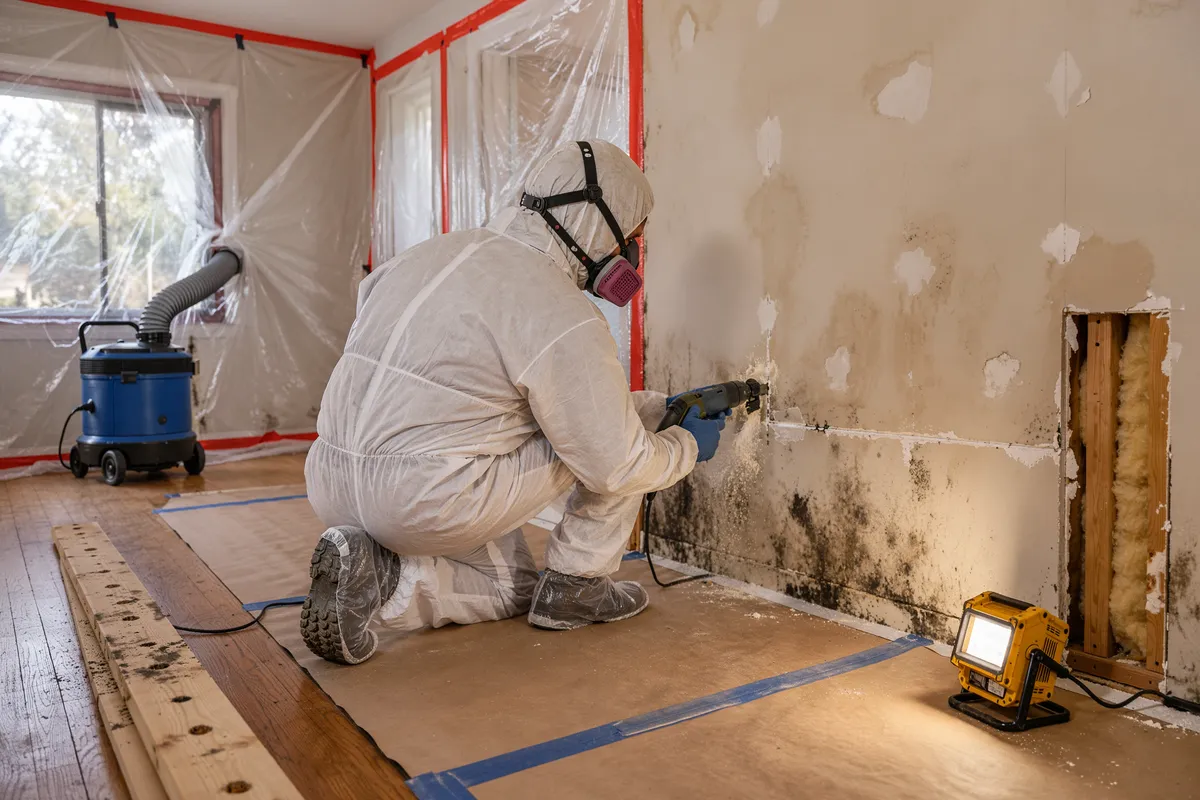
Visible, hidden and suspected mold
Some jobs begin with an obvious patch. Others start with a water stain, a bubbling wall or a smell with nothing to see. Either way, the remediation company looks for how far moisture traveled, because growth often extends past what shows on the surface. A trained eye and a moisture meter can tell the difference between a stain and active, damp growth.
AC and attic moisture
Hot inland summers keep air conditioners running hard. A clogged condensate line or sweating duct drips into insulation and ceilings, where mold can follow. Remediation includes cleaning or replacing damaged material and checking that the equipment drains as it should. Dry, reachable ductwork and a clear drain line are inexpensive things to check each season.
In the hot, dry valley summers, air conditioners run hard and ducts and air handlers in attics can sweat or drip, which is a common starting point for ceiling mold.
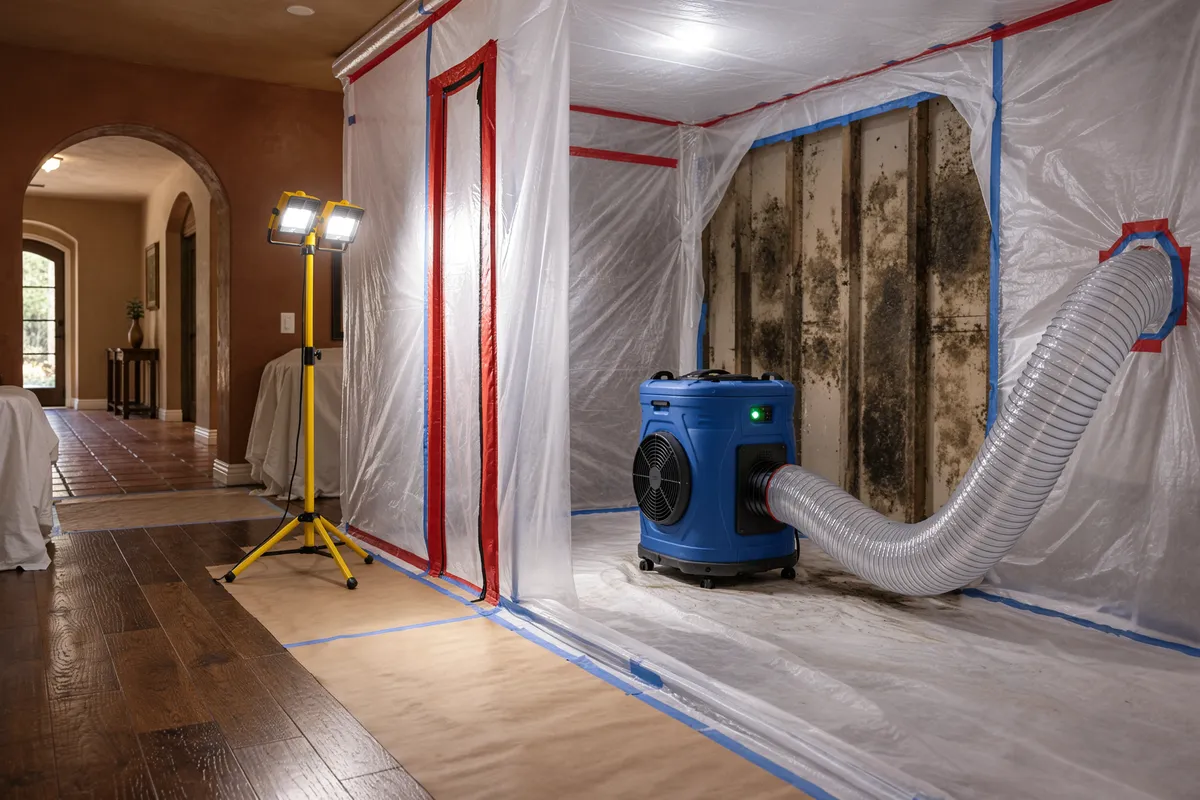
How a mold removal job runs
- Walk-through and moisture readings
- Repair the water source
- Seal the area with plastic and negative air
- Remove damaged material, clean the rest
- Dry, then reassess
Each stage is documented so the next trade, whether plumber or drywall installer, can pick up where the crew stopped.
Who handles what in Mission Hills
A quick CSLB license lookup is worth doing before you sign: California has no mold-specific license, but contract work of $1,000 or more needs a state contractor license.
Rebuild work after the mold comes out, such as new drywall or framing, may need a permit; the Los Angeles Department of Building and Safety is the office for Mission Hills addresses.
For tenants, the Los Angeles Housing Department is the office that takes complaints about substandard rental conditions here; state law counts visible mold growth as one of them.
Nearby, the same kind of help is available in Pacoima, San Fernando and North Hills.
Insurance and the water source
Coverage often depends on why the water got in. A sudden pipe burst may be treated differently from long-term seepage. Ask your insurer before work starts and keep photos, moisture readings and the written scope for the claim. Ask whether the company will talk to your adjuster, and who provides the documentation.
Drainage outside matters as much as plumbing inside
Irrigation spray hitting stucco, downspouts dumping at the foundation and soil piled against siding all send moisture toward the house. Redirect water away and the interior has a better chance of staying dry. Even a modest change, such as moving sprinkler heads away from the wall, can make a real difference.
Mold Removal & Remediation questions in Mission Hills
Does California require a mold license?
Who handles mold in a Mission Hills rental?
What goes in a written estimate?
Is every black spot toxic mold?
More mold services in Mission Hills
Mold Removal & Remediation nearby
Helpful guides
Sources
Last updated: