An air sample is compared with a sample taken outside the same day, so results are read against local conditions. Call the number on this page to be connected with a local mold company in San Dimas.
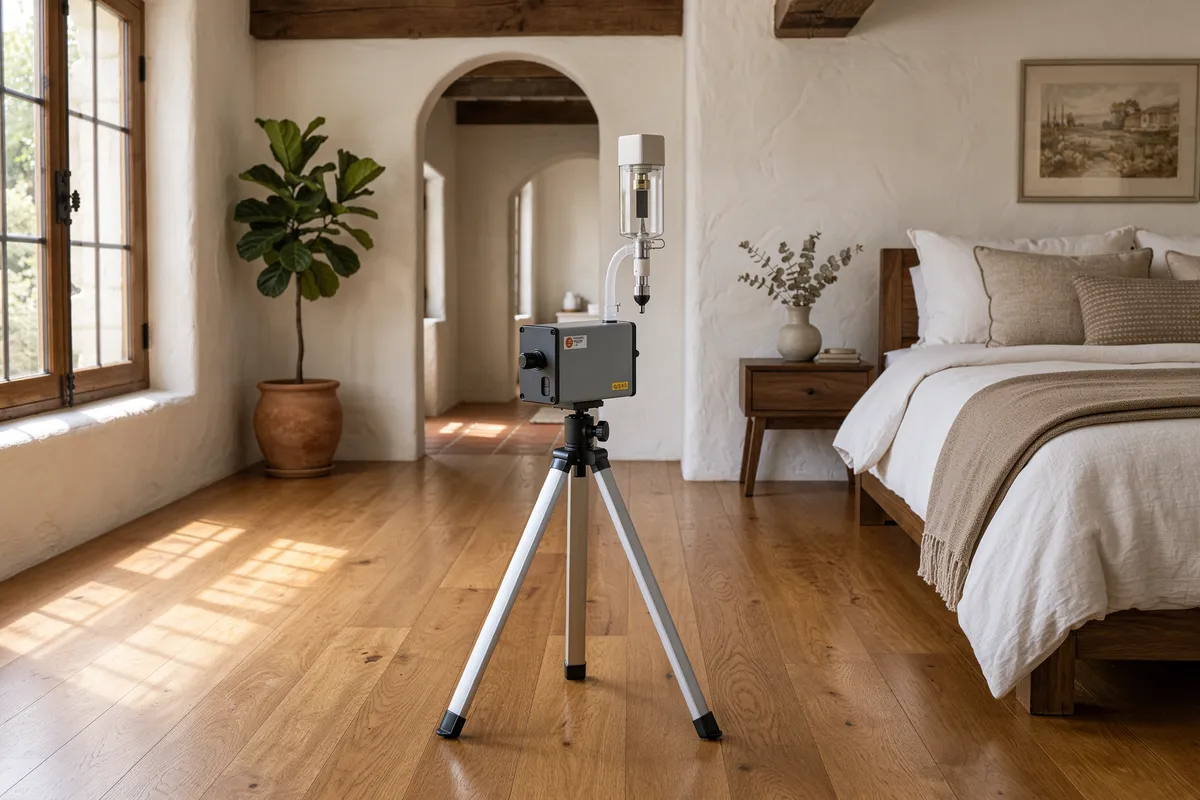
What a mold test actually measures
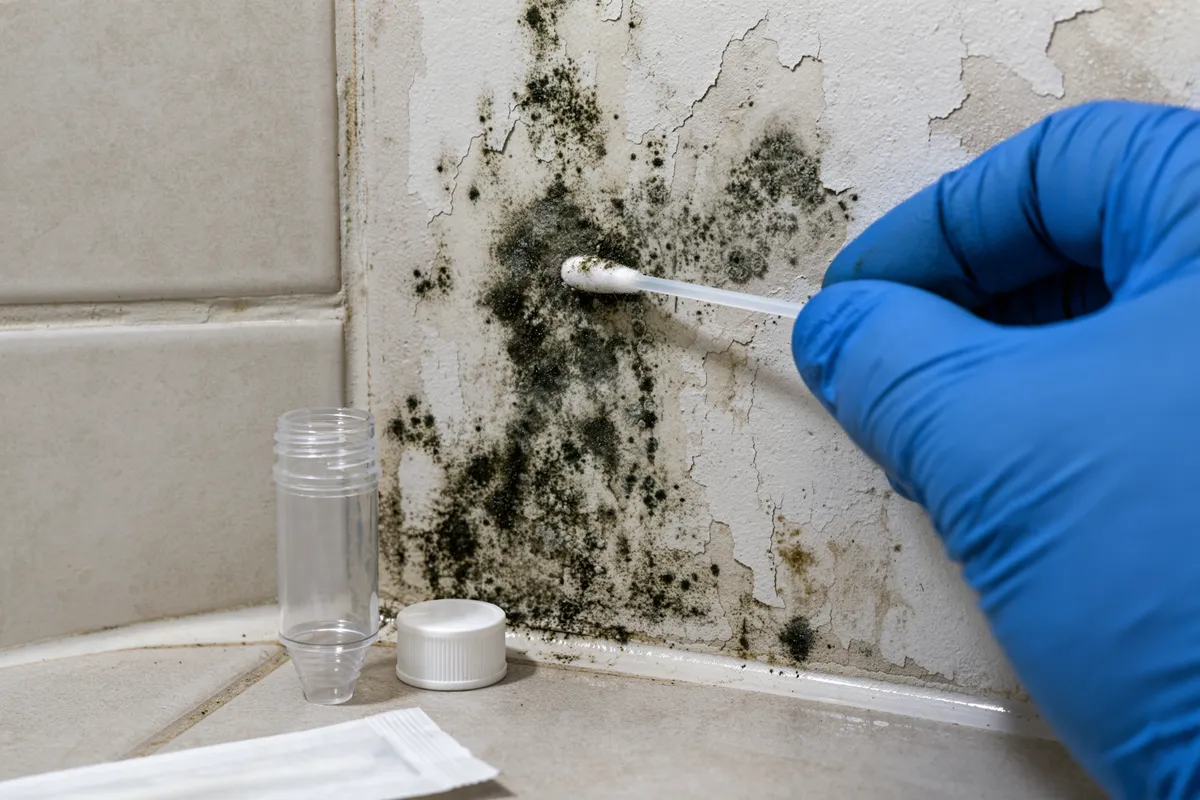
A lab looks at the sample you give it. An air cassette captures spores from a measured volume of air, a swab or tape lift captures what sits on a surface, and a bulk sample comes from a piece of material. Each answers a narrow question about one spot.
When something smells but nothing shows
If you cannot find the source, a sample taken in the room, in a wall cavity or near a vent can hint at whether hidden growth is present. Pair it with a moisture survey so any finding leads to a location rather than just a number. If the readings point to a spot, the next step is a targeted look at the wall, ceiling or duct nearby.
Houses built into a slope may take in moisture from uphill, so a sample is usually paired with a drainage and subfloor check.
Who handles what in San Dimas
The state of California doesn't license mold remediation as its own trade. The Contractors State License Board does license contractors, and any job priced at $1,000 or more (labor plus materials) calls for that license.
If the job grows into replacing drywall, cabinets or framing, ask whether the rebuild needs a permit from the local building department.
In many Los Angeles County cities, rental mold complaints go to the Los Angeles County Department of Public Health. Your city hall can tell you whether that applies in San Dimas.
Nearby, the same kind of help is available in Covina, Glendora and Pomona.
Choosing a lab
Ask which laboratory analyzes the samples and what accreditation or methods it uses. Reputable labs provide chain-of-custody forms and a clear report format. Avoid arrangements where you cannot learn who processed the sample. Ask for the lab report itself, not only a summary typed by the sampler.
Timing your test
Scheduling sampling soon after a leak, cleanup or major repair can skew results. Ask the company when the best time is, and tell them about recent water events, painting and cleaning in the area. Rain, new paint and a recent deep clean are all worth mentioning.
How to read a lab report
Look first at the outdoor control, then at indoor rooms. If indoor spore types match outside and counts are similar or lower, that usually looks normal. Types or amounts that stand out indoors suggest a source worth tracing. A single elevated type does not always mean a problem, so look at the pattern across samples.
Mold Testing questions in San Dimas
Does CDPH recommend testing?
Why take an outdoor sample?
Can a home kit do it?
Should the tester differ from the remediator?
More mold services in San Dimas
Mold Testing nearby
Helpful guides
Sources
Last updated: