Common local causes are plumbing and slab leaks, water heaters and winter-storm roof leaks; a plumber or roofer fixes the source first. Call the number on this page to be connected with a local mold company in Woodland Hills.
The First Two Days
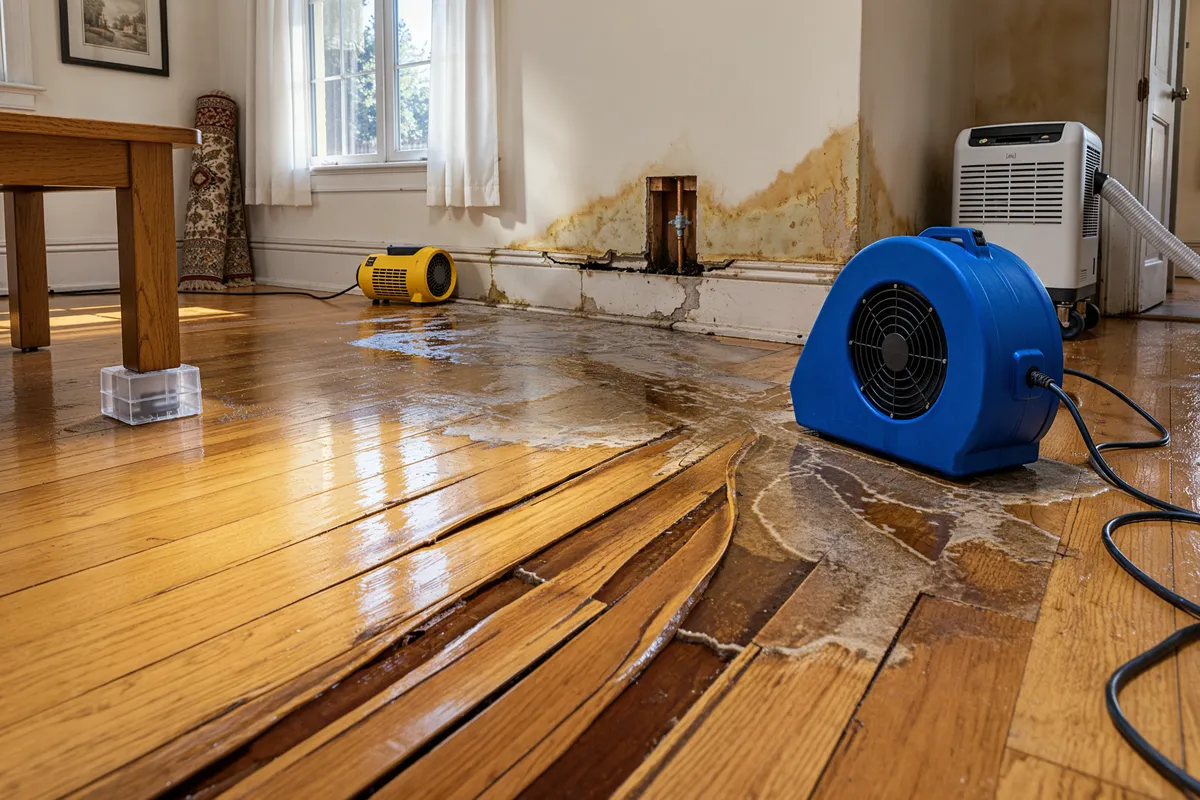
EPA advises drying wet materials within 24 to 48 hours. In practice: shut off the water at the source, remove standing water, lift soaked rugs and pads, and get air moving with fans. Photograph everything before you move it, since photos help with both repairs and insurance questions. Write down when you shut the water off and when the fans started.
Supply Lines and Fixtures
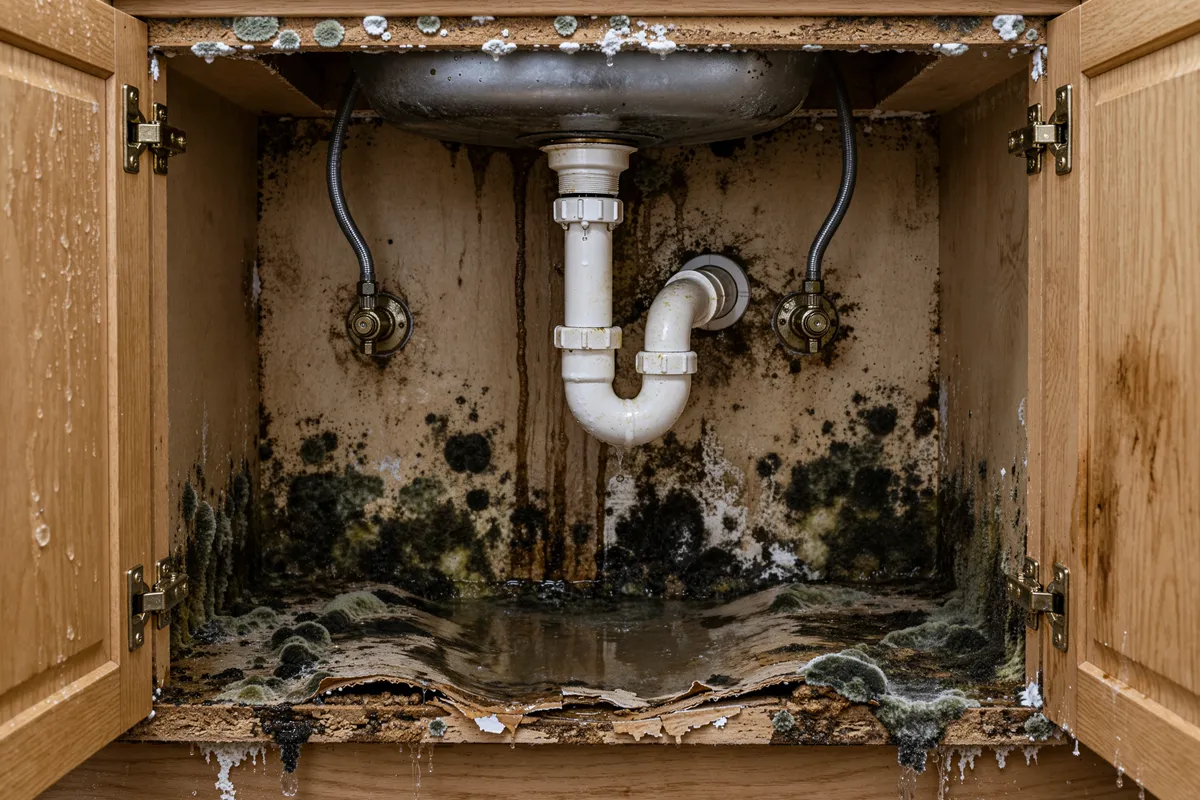
Braided hoses under sinks and toilets, shower valves and old copper fittings can drip steadily for months. Because the water stays inside cabinets and walls, the first clue may be a soft floor or a smell rather than a visible leak. Replace any that look bulged.
Homes cut into a hillside around Woodland Hills often depend on drains and weep holes. When those clog, water backs up against the wall and into baseboards.
Long hot seasons in the valley mean AC condensation is a major water source. When a drain pan overflows, insulation and drywall soak up the water.
Access and Containment
Working under a slab-adjacent floor, in a crawl space or in a ceiling cavity takes more labor and more protection for the rest of the house. Larger or hard-to-reach jobs usually need containment and air filtration, which adds to the scope. Tight spaces and ceilings add labor, even for small areas.
Drying the Structure
Air movers push air across wet surfaces, dehumidifiers pull moisture out and, where needed, small holes are cut to dry wall cavities. Readings are taken daily until they match dry reference points. Equipment noise and warmth are normal during this stage. Ask how many days of drying equipment the plan assumes.
Shut-Off Valve Know-How
Find the main water shut-off now, before a leak. Knowing where it is and how it turns can turn a flooded hallway into a mopping job. Also locate shut-offs under sinks and behind toilets, and test them once a year so they do not seize. Mark both shut-offs with a tag so anyone in the house can find them. Practice it once with the family.
Who handles what in Woodland Hills
No state agency here issues mold-specific credentials. Hiring for a bigger job? Look up the contractor's license number with the Contractors State License Board; jobs at or above $1,000 require one.
Rebuild work after the mold comes out, such as new drywall or framing, may need a permit; the Los Angeles Department of Building and Safety is the office for Woodland Hills addresses.
For tenants, the Los Angeles Housing Department is the office that takes complaints about substandard rental conditions here; state law counts visible mold growth as one of them.
Companies that take calls here usually also work in Canoga Park, Winnetka and Tarzana.
Leak & Water Damage Mold Removal questions in Woodland Hills
Fix the leak first or call a mold company first?
How do I know if mold is behind a wall after a leak?
Is mold after a roof leak different?
Is firefighting water a mold risk?
More mold services in Woodland Hills
Leak & Water Damage Mold Removal nearby
Helpful guides
Sources
Last updated: