Removal only holds if the water source is repaired first, so a good company traces the leak or condensation before taking out drywall. Call the number on this page to be connected with a local mold company in La Habra.
What homeowners usually notice first
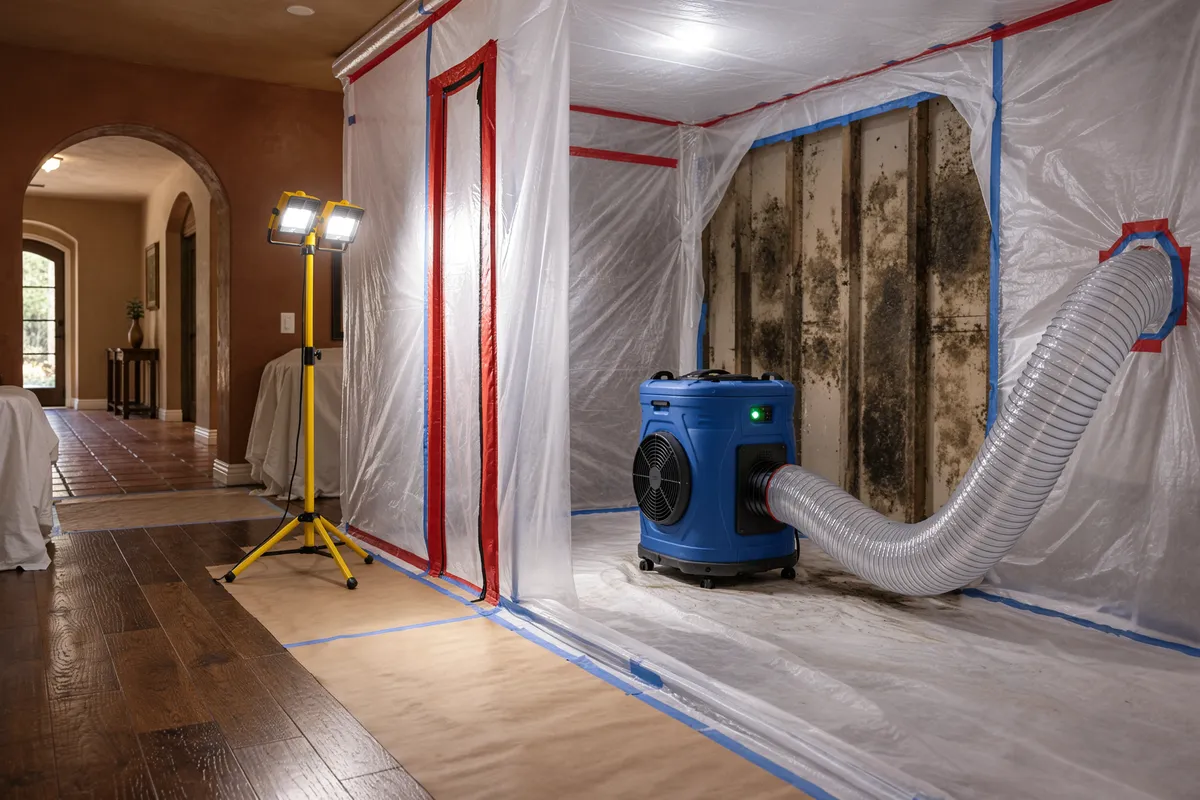
Often it is the smell before the sight: a closed-in odor in a closet, a hallway or under a sink. Then a discolored patch shows up on a ceiling corner or behind furniture. By the time the stain is obvious, the material underneath may already be saturated.
Older houses, raised foundations
Bungalows and post-war homes often sit over a crawl space. Irrigation runoff, a leaking drain or a missing vapor barrier raises moisture under the floor, and the framing above soaks it up. Remediation there can mean cleaning joists and correcting drainage.
What gets thrown out and what gets saved
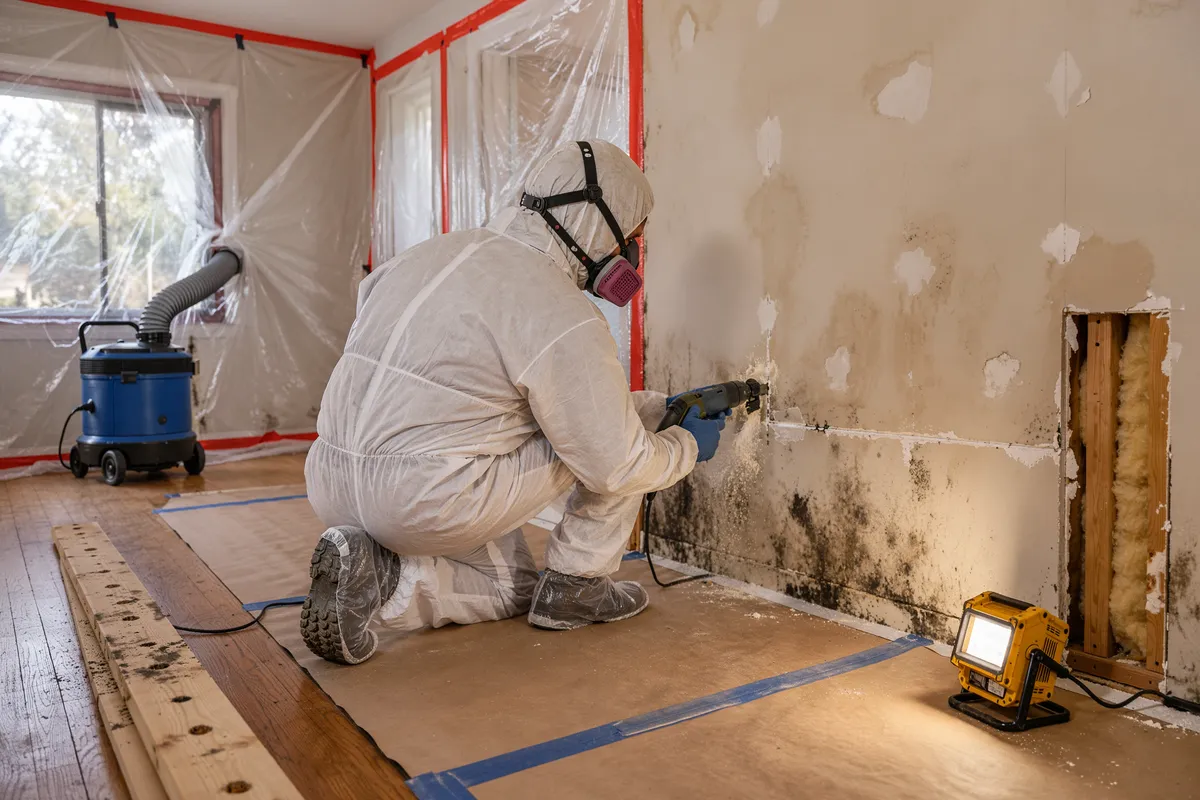
Porous items that are moldy, like soaked drywall, insulation and ceiling tile, typically go in sealed bags. Solid wood and concrete can usually be cleaned with HEPA vacuuming and scrubbing, then dried. The crew explains each choice. Disposal follows the local trash rules for construction debris, and the crew should tell you how it is handled.
Before work starts in La Habra
No state agency here issues mold-specific credentials. Hiring for a bigger job? Look up the contractor's license number with the Contractors State License Board; jobs at or above $1,000 require one.
Rebuild work after the mold comes out, such as new drywall or framing, may need a permit; the City of La Habra Building and Safety Division is the office for La Habra addresses.
If you rent, California housing law treats visible mold growth as a substandard condition, and local code enforcement can explain how complaints are handled.
Calls from La Habra are often matched with companies that also cover Whittier, Rowland Heights and La Mirada.
Insurance and the water source
Coverage often depends on why the water got in. A sudden pipe burst may be treated differently from long-term seepage. Ask your insurer before work starts and keep photos, moisture readings and the written scope for the claim. Ask whether the company will talk to your adjuster, and who provides the documentation.
Keeping it from coming back
EPA suggests keeping indoor humidity below about 60 percent, and ideally between 30 and 50. A basic hygrometer tells you where you stand. Run bath fans during and after showers, and fix drips the week you notice them. Small habits like these cost little and keep humidity where it belongs.
Mold Removal & Remediation questions in La Habra
When is professional removal needed?
Is removal different from inspection?
Do I need to leave during removal?
Who handles mold in a La Habra rental?
More mold services in La Habra
Mold Removal & Remediation nearby
Helpful guides
Sources
Last updated: