In hot summers, cold supply ducts in warm attics sweat and drip, and mold can grow on insulation and nearby drywall. Call the number on this page to be connected with a local mold company in San Fernando.
Signs Mold May Be in the System
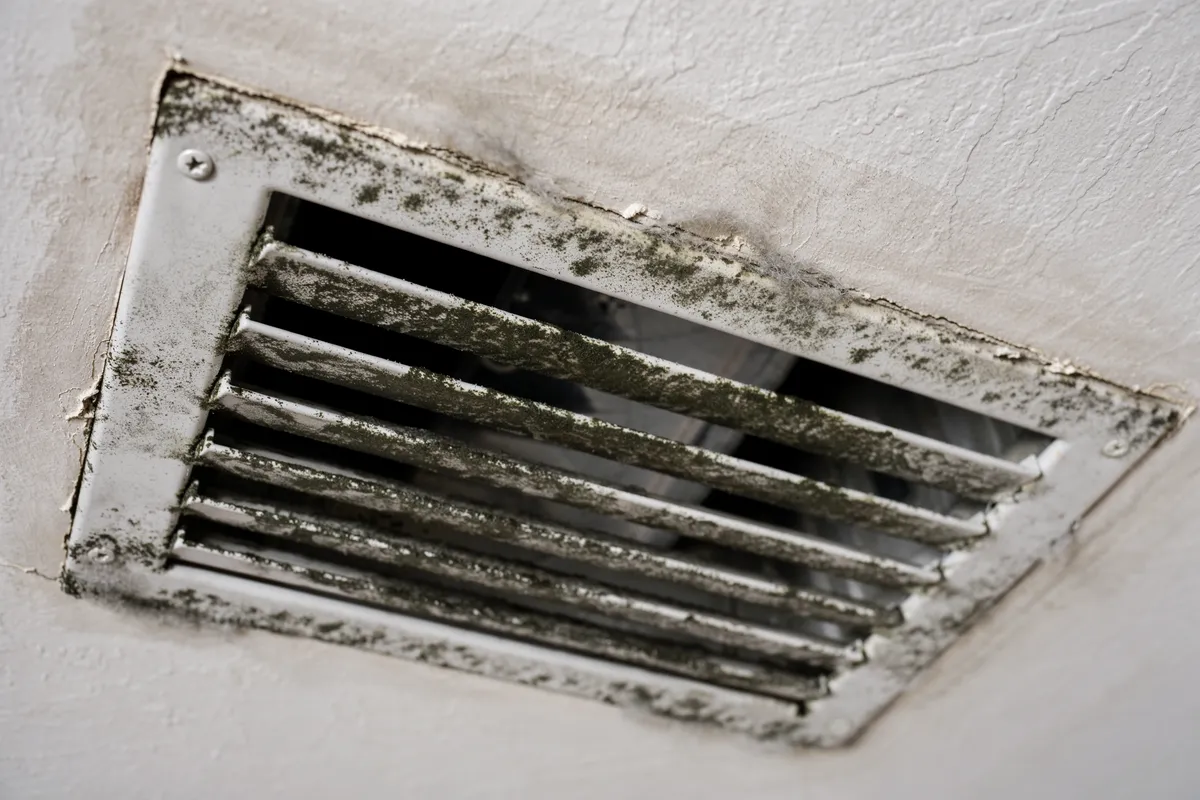
A musty or earthy smell as the AC starts is the classic clue. Others include dark speckles around vent grilles, dust that looks fuzzy on registers, stains on ceilings near an air handler, and water pooled around the indoor unit. Odor alone does not prove mold. Check the filter at the same time, since a clogged one often adds to the musty odor.
Clogged Condensate Lines
Algae and debris can plug the small drain line from the coil. The pan fills, overflows and soaks insulation, drywall and framing. In a closet or attic unit, this can go unnoticed for weeks, and a musty smell is often the first sign. Overflow from this pan is among the more frequent calls local companies get.
Houses in valley areas often have attic air handlers. A single clogged drain during a heat wave can overflow onto the ceiling and begin mold growth within days.
What Shapes the Price
The number of vents and runs, the size of the system, how much mold there is, whether insulation or flexible duct needs replacement, and how hard the attic or crawl space is to reach all affect cost. A single moldy branch is a smaller job than a whole system. Prices swing widely depending on what the inspection turns up inside the system.
The First Look
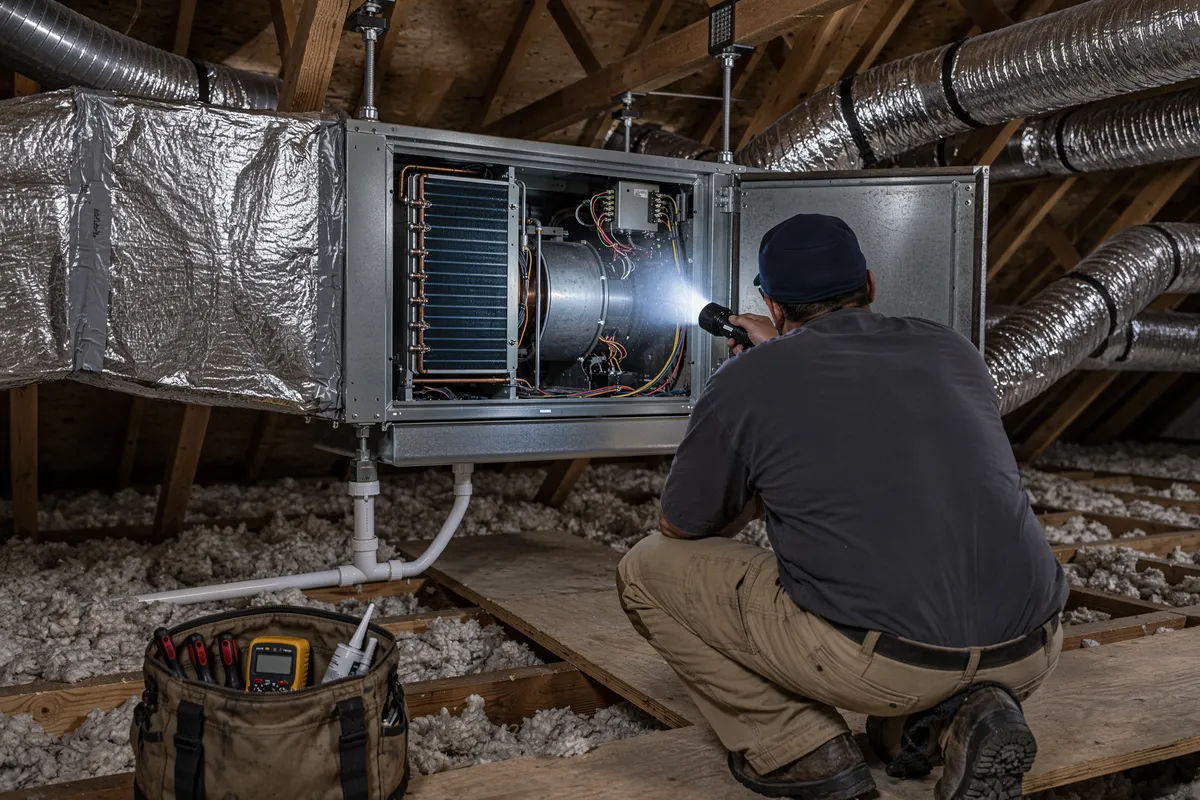
A company usually inspects the air handler, drain pan, coil, plenum and accessible ducts, takes moisture readings and notes any visible growth. You will likely be asked about smells, when the AC runs and any past leaks. A written scope should follow. A written summary afterward helps if the issue returns or you sell the house.
Keep the Drain Moving
Once or twice a year, have the condensate line flushed and the pan checked, especially before the hot season. A clear drain is the simplest protection against overflow. A float switch adds a safety net for attic and closet units. A short seasonal tune-up often covers all of this in one visit.
Who handles what in San Fernando
California has no separate state license for mold assessors or mold remediators, so the useful check is the contractor license: the Contractors State License Board (CSLB) requires one for jobs of $1,000 or more in labor and materials, and its online lookup shows the status.
The local building department handles building permits here, so that's the place to check before walls, cabinets or flooring go back in.
Tenants in much of the county report mold and leaks in rentals to the Los Angeles County Department of Public Health; check with the city whether that covers your San Fernando address.
Nearby, the same kind of help is available in Pacoima, Mission Hills and Granada Hills.
AC & Duct Mold Removal questions in San Fernando
How do I choose a company without a state mold license?
Can a landlord ignore mold on the AC?
Is condensation common in ducts?
Does new ductwork need a permit?
More mold services in San Fernando
AC & Duct Mold Removal nearby
Helpful guides
Sources
Last updated: